

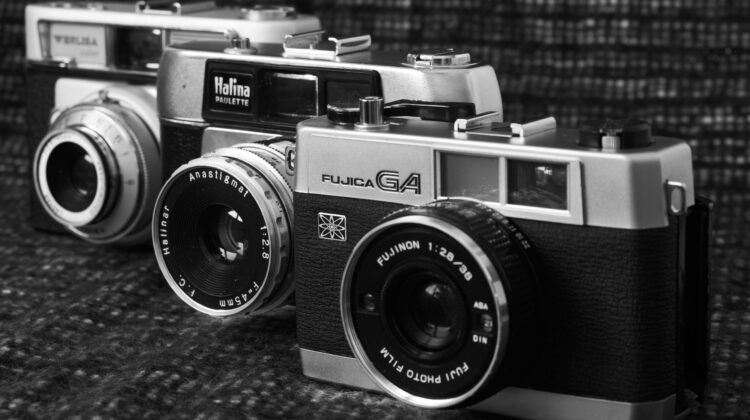
Let’s be real for a second: film photography is beautiful, but it is getting expensive. Buying a roll of 35mm film and then paying for lab processing can quickly drain your wallet. It makes you hesitate before every single click, and that completely kills the fun of shooting analog.
But what if you could magically get 72 photos out of a standard 36-exposure roll?
That is exactly why the half frame film camera trend is absolutely exploding right now. Instead of exposing a standard $36 \times 24\text{mm}$ frame, a half-frame camera splits that space right down the middle, shooting vertical $17 \times 24\text{mm}$ images.
Essentially, you buy one roll of film, but you get two frames for the price of one. In this guide, we’re going to look at the absolute best half-frame cameras available today, how they work, and whether they are worth your money.
6 Best Film Cameras for Beginners
1. Kodak Ektar H35: The Modern Aesthetic King
If you’ve spent any time looking at film photography on Instagram or TikTok lately, you’ve definitely seen the Kodak Ektar H35. It is a lightweight, plastic, gorgeous little camera that features a clean retro design with a faux-leather finish. It’s a point-and-shoot in its purest form: fixed shutter speed, fixed focus, and a simple manual flash switch.


Specifications
- • Brand: KODAK
- • Special Feature: Built In Flash
- • Film Format Type: 35mm
- • Item Weight: 200 Grams
- • Item dimensions L x W x H: 4.33 x 1.77 x 2.56 inches
- • Model Name: KODAK EKTAR H35
- • Film Color: Color Negative for bundles only
- • Compatible Devices: Camera
- • Min Shutter Speed: 1/60 seconds
- • Batteries: 1 Lithium-ion battery
PROs
- Insane Film Savings: Shoot 72 frames on a normal 36 roll without breaking the bank.
- Beginner-Friendly: Zero settings to mess up; just frame your shot and press the shutter button.
- Stunning Design: Looks premium and comes in beautiful vintage pastel colors.
CONs
- Plastic Lens Softness: The 22mm plastic optical element means images can look slightly soft at the edges.
- Fixed Shutter Limitations: Struggles in heavy overcast or low light if you forget to turn on the flash.
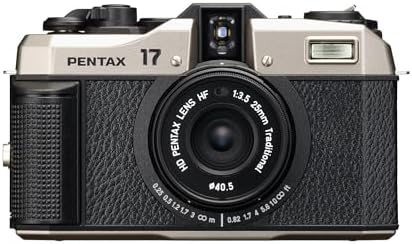
2. Pentax 17: The Premium Heavyweight
If you have a bigger budget and want a brand-new, premium half-frame camera that isn’t a plastic toy, the Pentax 17 is a masterpiece. Released recently as part of Pentax's massive film revival project, this camera features a gorgeous magnesium alloy top plate, manual zone-focusing, automatic exposure, and an incredibly sharp HD Pentax 25mm $f/3.5$ lens.



Specifications
- • Brand: Pentax
- • Special Feature: Lightweight
- • Film Format Type: 35mm
- • Item Weight: 1.4 Pounds
- • Item dimensions L x W x H: 7.68 x 5.39 x 4.09 inches
- • Included Components: Camera Body & Accessories
- • Model Name: PENTAX 17
- • Film Color: Color, Black and white
- • Compatible Devices: Camera
- • Batteries: 1 Lithium-ion battery
- • Max Shutter Speed: 1/2000s seconds
PROs
- Premium Build Quality: Solid metal and high-quality construction that feels substantial in the hand.
- Razor-Sharp Glass Lens: The highly engineered lens delivers incredible details despite the smaller frame size.
- Smart Shooting Modes: Includes bokeh modes, slow-sync flash, and full auto features.
CONs
- Very Expensive: Retails at a premium price point, which might scare off casual beginners.
- Zone Focus Learning Curve: You have to manually select icons (person, mountain, etc.) to focus your shots.
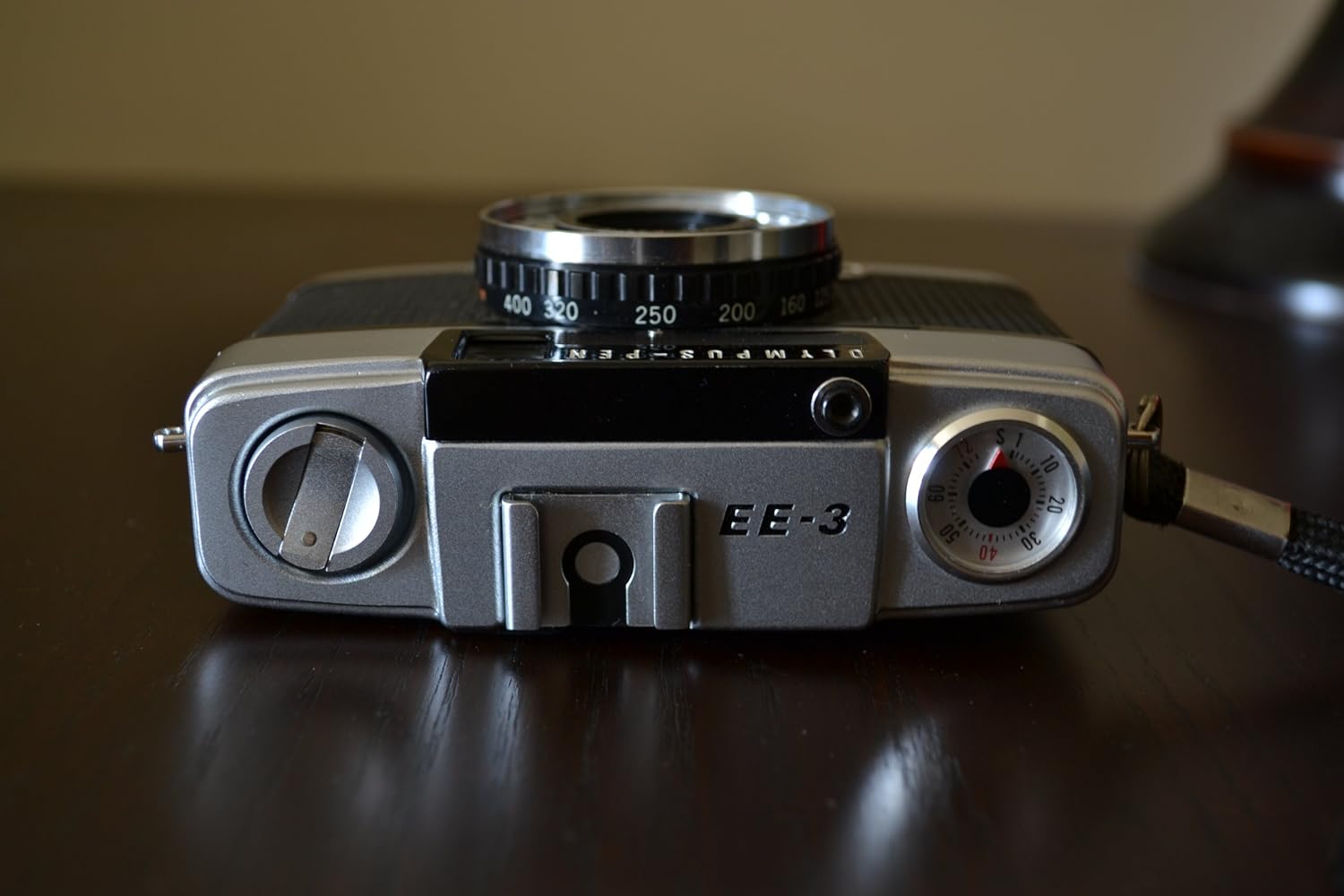
3. Olympus Pen EE-3: The Vintage Vintage Workhorse
Before modern reusables took over, Olympus ruled the half-frame world in the 1960s and 70s with the Pen series. The Pen EE-3 is a vintage, fully mechanical point-and-shoot built out of solid metal. Its coolest trick? It uses a solar-powered selenium light meter ring around the lens—meaning it never needs a battery to run its automatic exposure system.




Specifications
- • Brand: Olympus Pen F
- • Model Name: EE-3
- • Batteries: 1 Lithium-ion battery
- • Compatible Mountings: Pen FT
- • Aspect Ratio: 3:2
- • Photo Sensor Technology: CMOS
- • Supported File Format: RAW
- • Maximum Focal Length: 28 Millimeters
- • Maximum Aperture: 3.5 f
- • Expanded ISO Minimum: 10
- • Metering Description: Center Weighted
PROs
- No Batteries Required: The selenium cell automatically handles exposure metering completely on its own.
- Bulletproof Metal Body: Vintage Japanese craftsmanship that will easily last for several more decades.
- The "Red Flag" System: The viewfinder pops up a red warning flag if there isn't enough light, preventing wasted shots.
CONs
- Secondhand Market Gamble: Old selenium meters can die over time, so you must buy from a tested seller.
- No Built-in Flash: Requires you to slide an external vintage flash unit onto the hot shoe for night shots.
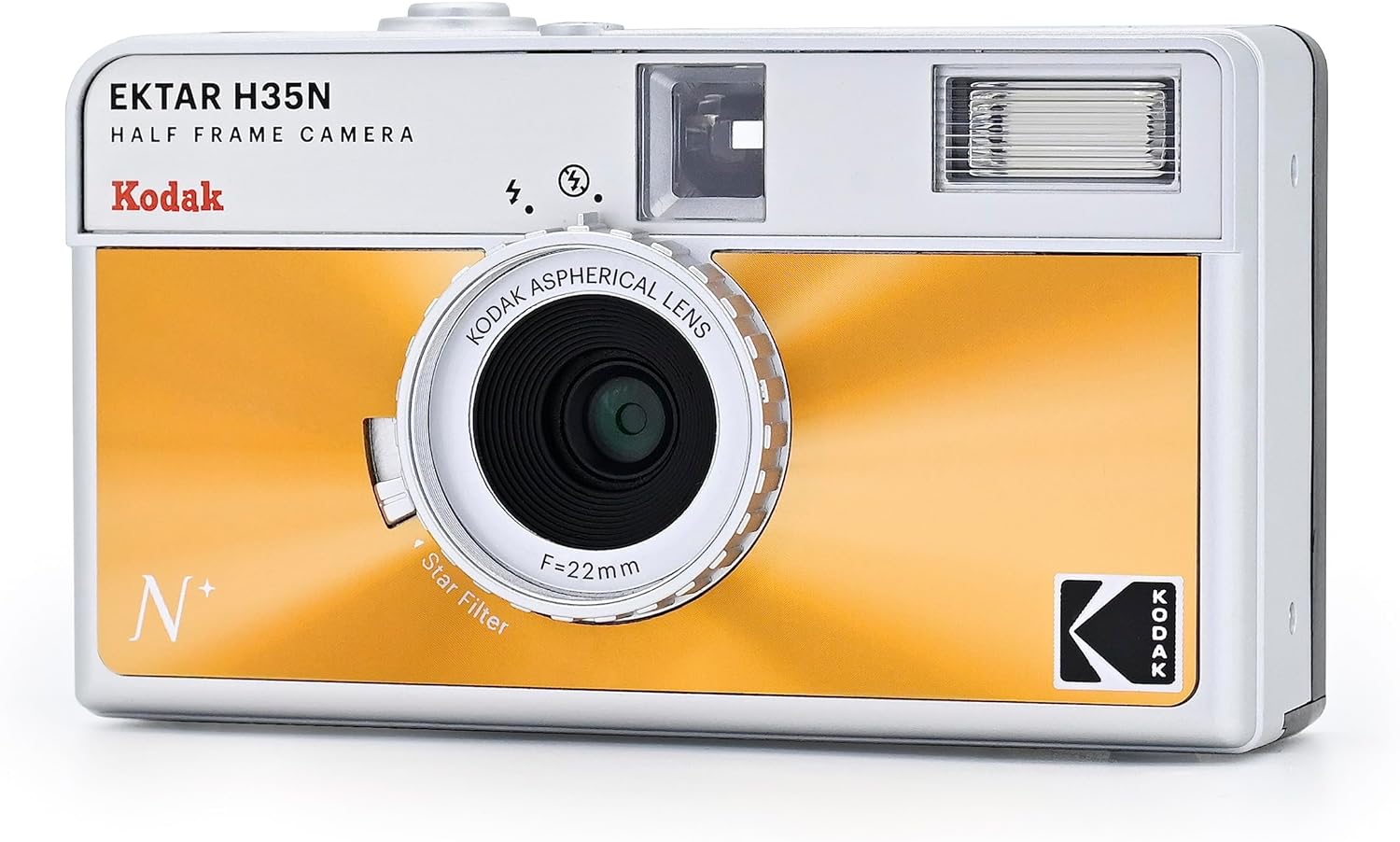
4. Kodak Ektar H35N: The Upgraded Sequel
If you love the original H35 but want just a little bit more sharpness and creative flexibility, the H35N is Kodak's answer. They upgraded the lens from full plastic to a glass element, added a built-in star filter for dreamy night highlights, and included a bulb shutter setting for beautiful long exposures after dark.


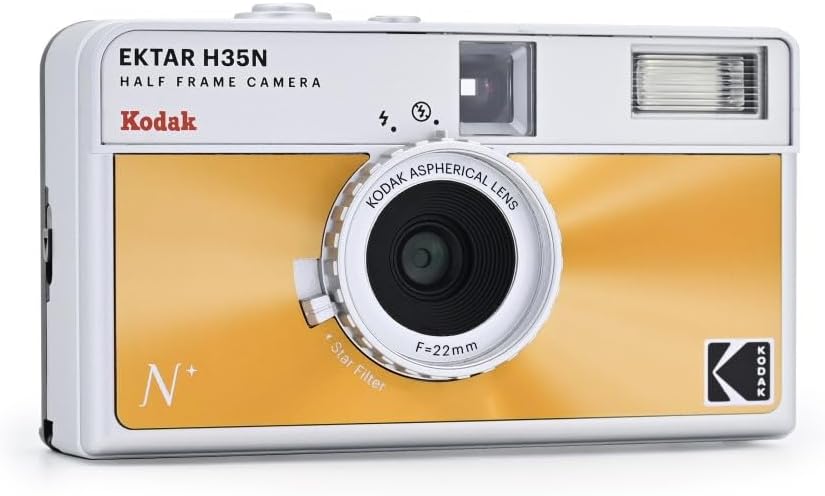

Specifications
- • Brand: KODAK
- • Special Feature: Compact
- • Film Format Type: 35mm
- • Item Weight: 110 Grams
- • Item dimensions L x W x H: 4.33 x 1.77 x 2.56 inches
- • Included Components: Camera Kit
- • Model Name: EKTAR H35
- • Film Color: Colored
- • Compatible Devices: Camera
- • Batteries: 1 Lithium-ion battery is required
- • Max Shutter Speed: 0.005 seconds
PROs
- Sharper Glass Lens: The updated optical element significantly reduces corner blur and distortion.
- Fun Creative Filters: The toggleable star filter makes street lights and flash highlights pop beautifully.
- Tripod Mount & Bulb Mode: Allows you to venture into creative nighttime light-painting and long-exposure work.
CONs
- Still a Toy Camera Base: While the lens is glass, the chassis remains lightweight plastic.
- Marginally Higher Price: Costs slightly more than the base H35 model.
The Catch: Is a Half-Frame Camera Right For You?
Before you buy one, there is a tiny creative quirk you need to know about.
Because the film frame is split vertically, the default orientation of a half-frame camera is Portrait (Vertical). When you hold the camera normally, you are framing a vertical shot perfect for phone screens. If you want a traditional horizontal landscape picture, you actually have to hold the camera sideways!
Additionally, because the negative is half the size, your final pictures will have more grain and slightly less fine detail than a regular full-frame camera. If you love clean, ultra-crisp commercial images, stick to full-frame. But if you live for that dreamy, texture-rich, high-grain vintage film look, half-frame is perfect.
Final Advice:
If you are tired of spending a fortune on film rolls but can't let go of the analog experience, a half-frame film camera is the smartest investment you can make in 2026.
- Want a beautiful, simple, cheap starting point? Get the Kodak Ektar H35.
- Want professional glass performance and premium build? Save up for the Pentax 17.
Have you ever shot a half-frame roll before? Drop a comment below with your thoughts, or ask any questions you have before buying your first unit!
Leave a Reply