

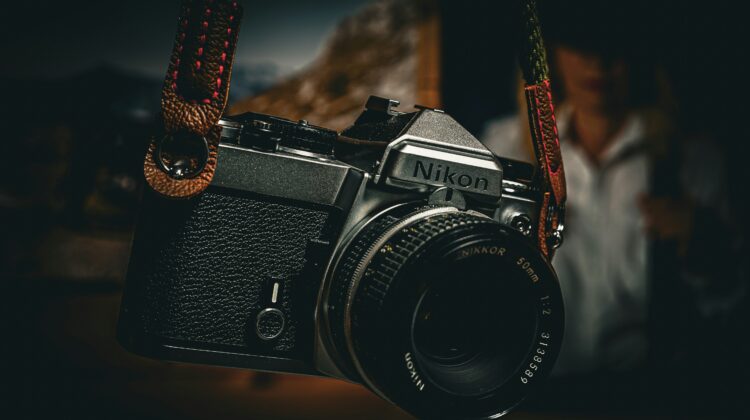
When it comes to building an indestructible, reliable, and smooth workhorse camera, few brands command as much respect as Nikon. During the golden age of 35mm film, while other companies plasticized their designs, Nikon continued to forge metal engineering masterpieces. Sitting perfectly at the intersection of compact form factor and professional durability is the legendary Nikon FE.
Introduced in 1978 as the compact electronic sibling to the fully mechanical Nikon FM, the Nikon FE quickly became a favorite backup camera for professional photojournalists and the primary tool for serious hobbyists.
It strips away all unnecessary gimmicks, offering a direct, tactile relationship between the photographer, the light, and the film plane. In this detailed Nikon FE review, we will break down its exceptional feature set, explore its world-class compatibility, and determine why this camera belongs at the top of your analog wishlist.

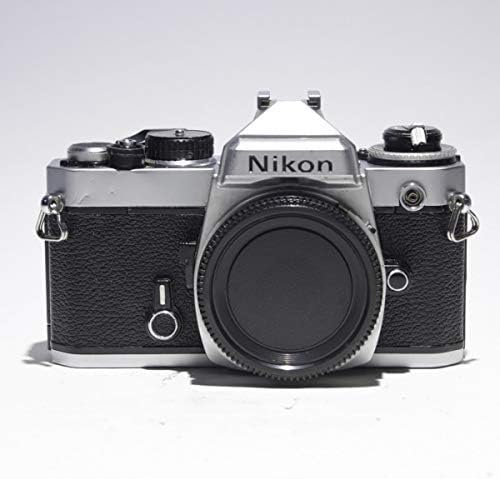


Specifications
- • Brand: Nikon
- • Special Feature: Auto Exposure
- • Film Format Type: 35mm
- • Item Weight: 1 Pounds
- • Item dimensions L x W x H: 6 x 4 x 3 inches
- • Included Components: Camera Body, Lens Caps, MD-11 Motor Drive, Cable Release
- • Model Name: FE
- • Film Color: color
- • Compatible Devices: Camera
- • Batteries: 1 Lithium-ion battery is required. (included)
- • Shutter Type: Focal Plane Shutter
Technical Specifications: The Compact Workhorse
Don't let its slim profile fool you; the Nikon FE is an absolute tank. Here is the technical breakdown of what makes it run:
- Camera Type: 35mm Single Lens Reflex (SLR)
- Lens Mount: Nikon F-Mount (Supports Non-AI, AI, AI-S, and AF lenses with caveats)
- Shutter: Electronically controlled, vertical-travel metal focal-plane shutter
- Shutter Speeds: $8\text{s}$ to $1/1000\text{s}$ (Stepless in Auto Mode), plus Mechanical $1/90\text{s}$ (M90) and Bulb (B)
- Exposure Modes: Aperture-Priority Automatic (Auto) and Full Manual (M)
- Exposure Metering: TTL center-weighted ($60/40$ balance) using dual Silicon Photodiodes (SPD)
- ISO Range: Manual selection from ISO 12 to 3200 (with an integrated $\pm2$ EV exposure compensation dial)
- Power Source: Two $1.55\text{V}$ LR44 or SR44 button-cell batteries
- Weight: $590\text{g}$ (Body only)
5 Reasons the Nikon FE is a Masterpiece
1. Flawless Aperture-Priority Automation
While full manual control is wonderful, there are times in street and documentary photography where light conditions shift faster than you can spin dials. The Nikon FE features a brilliant Aperture-Priority Auto mode (marked by a green "AUTO" setting on the shutter speed dial).
You select your desired lens aperture to manage your depth of field, and the camera’s internal analog computer instantly picks the exact shutter speed between $8\text{s}$ and $1/1000\text{s}$. Because it is stepless in Auto mode, it can accurately fire at unique intervals like $1/342\text{s}$ for pixel-perfect exposures.
2. The Universal Nikon F-Mount Legacy
One of the single greatest advantages of owning a Nikon FE is the lens choice. Nikon has utilized the F-mount system since 1959. This means the FE can accept almost any classic manual focus manual lens produced across multiple decades, including AI and AI-S variants.
More importantly, it includes a rare, flip-up meter coupling lever on the body ring. This allows you to safely mount older, legacy Non-AI lenses using stopped-down metering—a feature missing on later models like the Nikon FE2.
3. Dual-Needle Viewfinder Clarity
The viewfinder display in the Nikon FE is an absolute masterclass in data visualization. Instead of flashing LEDs or distracting digital numbers, it uses a timeless dual-needle matching system along the left edge.
A black needle shows you what shutter speed the camera's meter recommends, while a translucent green needle tracks your physically selected shutter speed. Matching the two needles gives you perfect exposure balance without taking your eye away from framing the shot.
4. Mechanical Battery Independence (M90 Mode)
Because the shutter is electronically governed, a dead battery would normally render most vintage cameras completely useless out in the field. Nikon engineered a brilliant safety net into the FE body: the M90 setting.
If your twin LR44 batteries freeze or run out of charge mid-shoot, you can switch the dial to "M90". This mechanically triggers the shutter to fire at a perfectly timed $1/90\text{s}$ without requiring a single drop of electrical power. You can also fire on Bulb mode without batteries.
5. All-Metal Precision Build Quality
The moment you pick up a Nikon FE, your hands instantly notice the difference. It features a rugged copper-silumin aluminum alloy chassis wrapped in thick metal top and bottom plates.
The dials click into place with distinct, satisfying tactile feedback. The film advance lever glides like silk on smooth bearings. It feels like a high-end Swiss watch combined with a heavy-duty military tool, built to handle rain, dust, and decades of hard mechanical use.
📖 You May Also Like:
Looking for a legendary mechanical alternative? Check out our Pentax K1000 Review: The Indestructible Student Favorite SLR.
Head-to-Head Comparison: Nikon FE vs. Canon AE-1 Program
How does Nikon's mid-range electronic masterpiece stack up against Canon's absolute bestseller? Let us look at the key metrics:
| Feature Specs | Nikon FE | Canon AE-1 Program |
|---|---|---|
| Chassis Material | Full Metal (Aluminium Alloy) | Plastic Polycarbonate with Metallic Coating |
| Auto Exposure style | Aperture Priority (More control over depth) | Shutter Priority & Full Program Mode |
| Dead-Battery Operation | Yes (Mechanical backup at 1/90s + Bulb) | No (Completely dead without 4LR44 battery) |
| Viewfinder Display | Classic Dual Analog Match-Needles | Digital LED Aperture Readouts |
Common Maintenance: The Sticky Foam & FRE Issues
While the electronic circuits inside the Nikon FE are unbelievably robust, aging units suffer from two minor structural flaws that you should check before laying down your money:
- Degraded Light Seals and Mirror Dampers: Over forty years, the open-cell foam strips inside the film door hinges and the mirror bounce bumper slowly turn into a gooey, black sticky residue. If left uncleaned, this letting light leak onto your film or jams the focusing screen. Fortunately, pre-cut foam replacement kits are incredibly cheap and easy to install.
- The FRE (Functional Resistance Element) Dirt: If you look through the viewfinder and notice the exposure meter needle jumping around erratically even when pointing at steady light, the internal ceramic resistor strip under the film advance assembly is likely coated in vintage dust or grease. A quick application of electrical contact cleaner by a camera technician resolves this permanently.
📖 You May Also Like:
Want to explore electronic systems with bright viewfinders? Head over to our Minolta X-700 Review: The Ultimate Program SLR.
Top 3 Lenses for the Nikon FE System
To witness the true resolving power of this beautiful SLR camera body, attach these legendary manual focus Nikkor lenses:
1. Nikkor 50mm f/1.8 AI-S (Pancake Version)
This is one of the sharpest standard prime lenses Nikon ever created. It features virtually zero distortion, incredible micro-contrast, and is designed flat like a pancake, making your Nikon FE pocketable and exceptionally lightweight for travel.
2. Nikkor 28mm f/2.8 AI-S
Famous for its close-focus correction system, this wide-angle prime lens can focus on subjects just $20\text{cm}$ away while maintaining edge-to-edge razor-sharp details. It is the ultimate lens choice for environmental portraits and complex landscape storytelling.
3. Nikkor 105mm f/2.5 AI
This specific lens design was used by photojournalist Steve McCurry to capture the globally famous "Afghan Girl" National Geographic cover shot. It delivers creamy bokeh backgrounds, spectacular color separation, and remains one of the finest portrait lenses in analog history.
Gear Up Your Nikon Setup:
Ensure your vintage Nikon is fueled, protected, and packed with high-quality film stock via these direct Amazon essentials:
Complete Your Nikon FE Analog Kit:
-
Premium Metering Battery:
(Pro Tip: Silver Oxide cells maintain stable voltages longer than regular alkaline LR44 cells, keeping your meter needle 100% accurate).TOP PICKStar Rating★★★★★4.6 out of 5 starsOur Score9.7/10Specifications
- • Batteries: 1 Lithium-ion battery is required. (included)
-
The Ultimate Street Film:
(Yields high-contrast grit and dramatic grain structures that perfectly complement classic Nikkor glass traits).TOP PICKStar Rating★★★★★4.8 out of 5 starsOur Score9.9/10Specifications
- • Brand: Ritz Camera
- • Film Format Type: 135
- • Model Name: Tri-X 400TX
- • Film Color: Black and White
- • Batteries: 1 Lithium-ion battery is required. (included)
- • Exposures per Roll: 24
-
Vibrant Retro Color Roll:
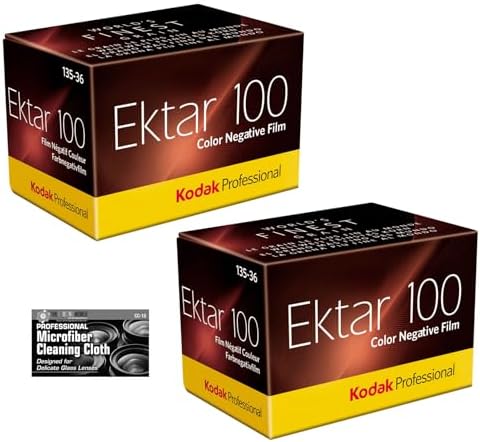
(The finest grain color negative film available, providing saturated landscape palettes).EDITORS CHOICEStar Rating★★★★★5 out of 5 starsOur Score10/10Specifications
- • Brand: The Imaging World
- • Film Format Type: 135
- • Model Name: Ektar35 K1
- • Film Color: Colored
- • Batteries: 1 Lithium-ion battery is required. (included)
- • Exposures per Roll: 36
-
Handcrafted Protection:
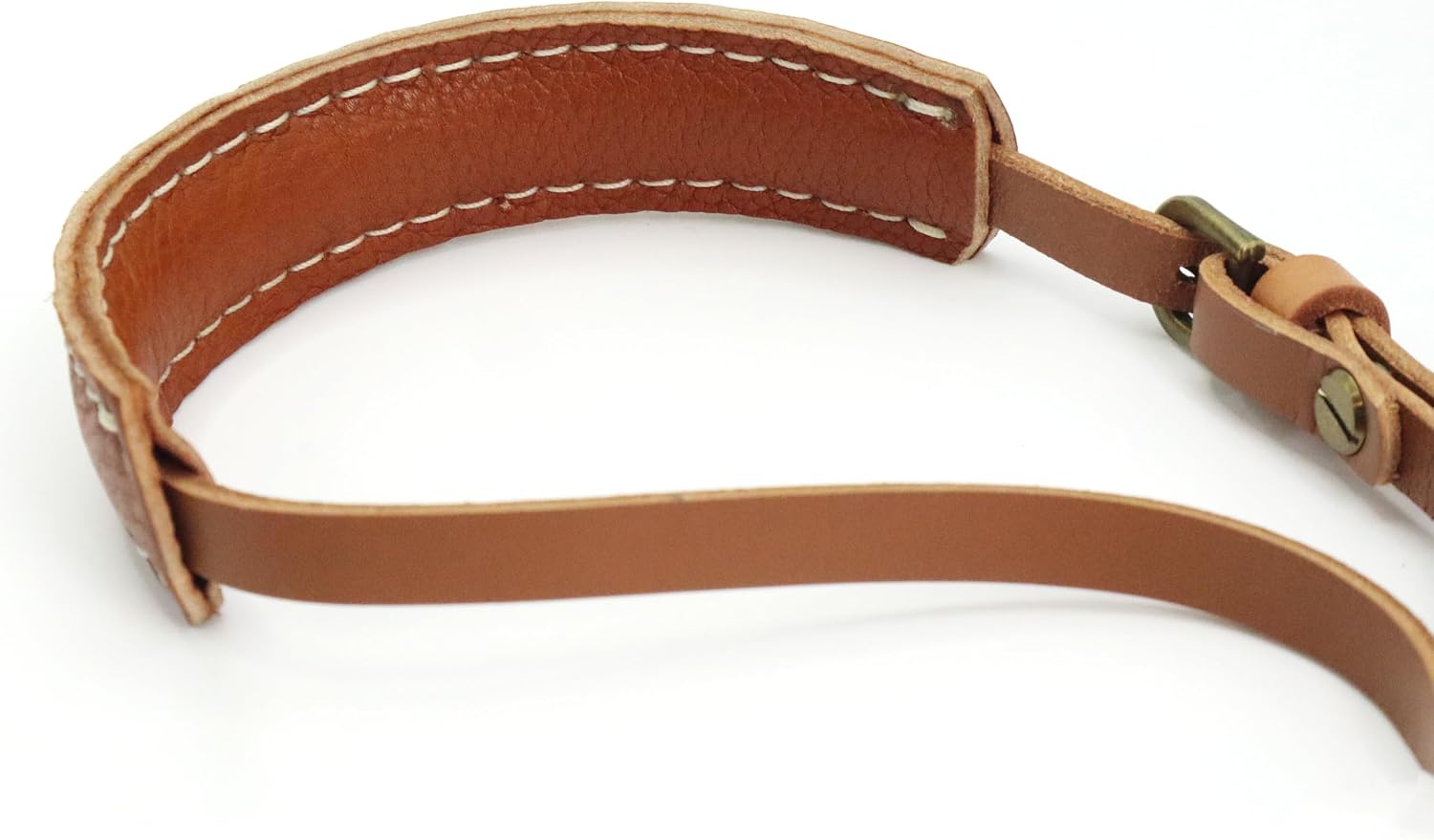
(Adds matching aesthetic support and securely balances the heavy metallic build of the FE).TOP CHOICEStar Rating★★★★★5 out of 5 starsOur Score10/10Specifications
- • Batteries: 1 Lithium-ion battery is required. (included)




Q1: Can I use modern Nikon AF-S or G-type lenses on the Nikon FE? +
While modern autofocus G-type or E-type lenses will physically click into the F-mount, they lack a mechanical aperture ring on the barrel. Without this ring, the lens aperture automatically stops down to its tightest setting (usually f/22), causing your pictures to turn out completely black and underexposed. Stick to manual focus AI, AI-S, or older AF-D generation lenses.
Q2: How do I turn the internal light meter off to preserve battery life? +
Nikon engineered a brilliant mechanical switch inside the advance lever. When the lever is pushed fully flush against the camera's body housing, the meter system is locked completely off. Gently swinging the lever outward to its stand-by position reveals a small red dot, activating the dual-needle system inside the viewfinder.
Leave a Reply