

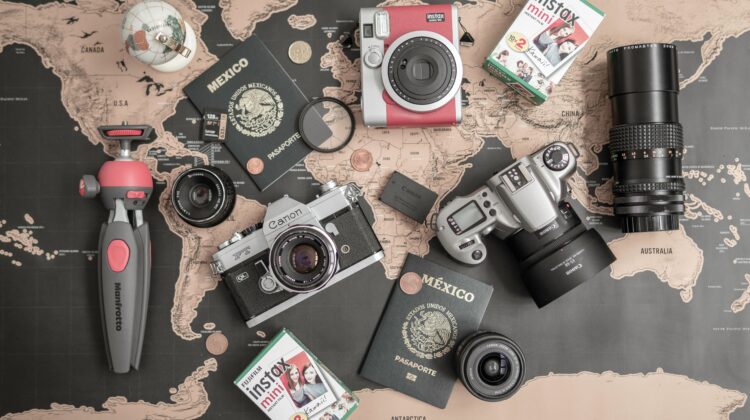
Capturing memories from a breathtaking mountain peak or a vibrant street market requires a companion that won’t weigh you down. While modern smartphones are convenient, nothing matches the image depth, dynamic range, and mechanical satisfaction of a dedicated travel camera.
The ideal travel cameras strike a perfect balance between portability, battery endurance, and exceptional image quality. You need a device that is small enough to slip into a jacket pocket but powerful enough to handle harsh midday sun or low-light evening environments.
If you are planning your next adventure and want to elevate your photography, here is our definitive guide to the 5 best travel camera options worth buying right now.
What Makes a Great Travel Camera?
When evaluating options for a journey, look beyond the megapixel count. Consider these crucial metrics:
- Form Factor: A heavy setup stays in the hotel room. True portability means compact bodies and pancake-style or collapsing lenses.
- Battery Longevity: Charging ports can be scarce on the road. Look for USB-C charging compatibility so you can top up using a power bank.
- Sensor Performance: A larger sensor helps capture pristine details during sunsets or indoor architectural tours without introducing digital noise.
5 Best Pentax Film Camera Models Worth Buying
5 Best Travel Camera Models Worth Buying
1. Sony RX100 VII (The Ultimate Pocket Powerhouse)
The Sony RX100 VII packs professional-grade performance into a body that genuinely fits inside a standard pocket. Featuring a versatile $24-200\text{mm}$ equivalent zoom lens and lightning-fast autofocus tracking, it handles everything from wide landscape vistas to distant wildlife shots.

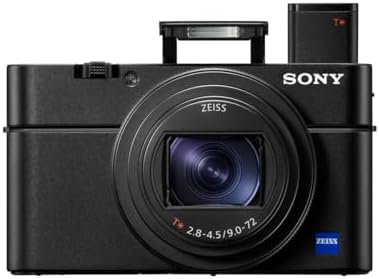


Specifications
- • Batteries: 1 Lithium-ion battery is required. (included)
- • Compatible Mountings: Zeiss
- • Aspect Ratio: 16:9, 3:2, 4:3
- • Photo Sensor Technology: CMOS
- • Supported File Format: JPEG, Raw
- • Image Stabilization: Digital, Optical
- • Maximum Focal Length: 200 Millimeters
- • Optical Zoom: 8 x
- • Maximum Aperture: 2.8 f
- • Expanded ISO Minimum: 64
- • Metering Description: Average, Center-Weighted Average, Multi, Spot
- Key Highlight: Pro-tier real-time autofocus tracking and eye detection wrapped in an ultra-compact premium chassis.
- Best For: Travelers who refuse to compromise on premium performance but demand absolute pocketability.
🟢 Pros
- Incredibly versatile 24-200mm optical zoom range covers all scenarios.
- Class-leading autofocus system tracks moving subjects perfectly.
- Pop-up electronic viewfinder (EVF) is fantastic for bright sunny days.
🔴 Cons
- Premium flagship pricing can be steep for casual hobbyists.
- Small battery capacity means carrying spares is essential for full days.
2. Fujifilm X-T30 II (Aesthetic Design Meets Modern Power)
Fujifilm is celebrated for its tactile, analog-inspired dials and iconic color science. The X-T30 II brings these signature elements into a lightweight mirrorless body, letting you apply stunning Film Simulations directly to your photos without needing lengthy editing sessions.

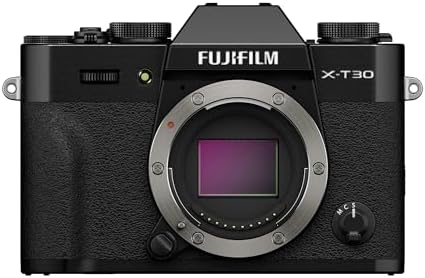

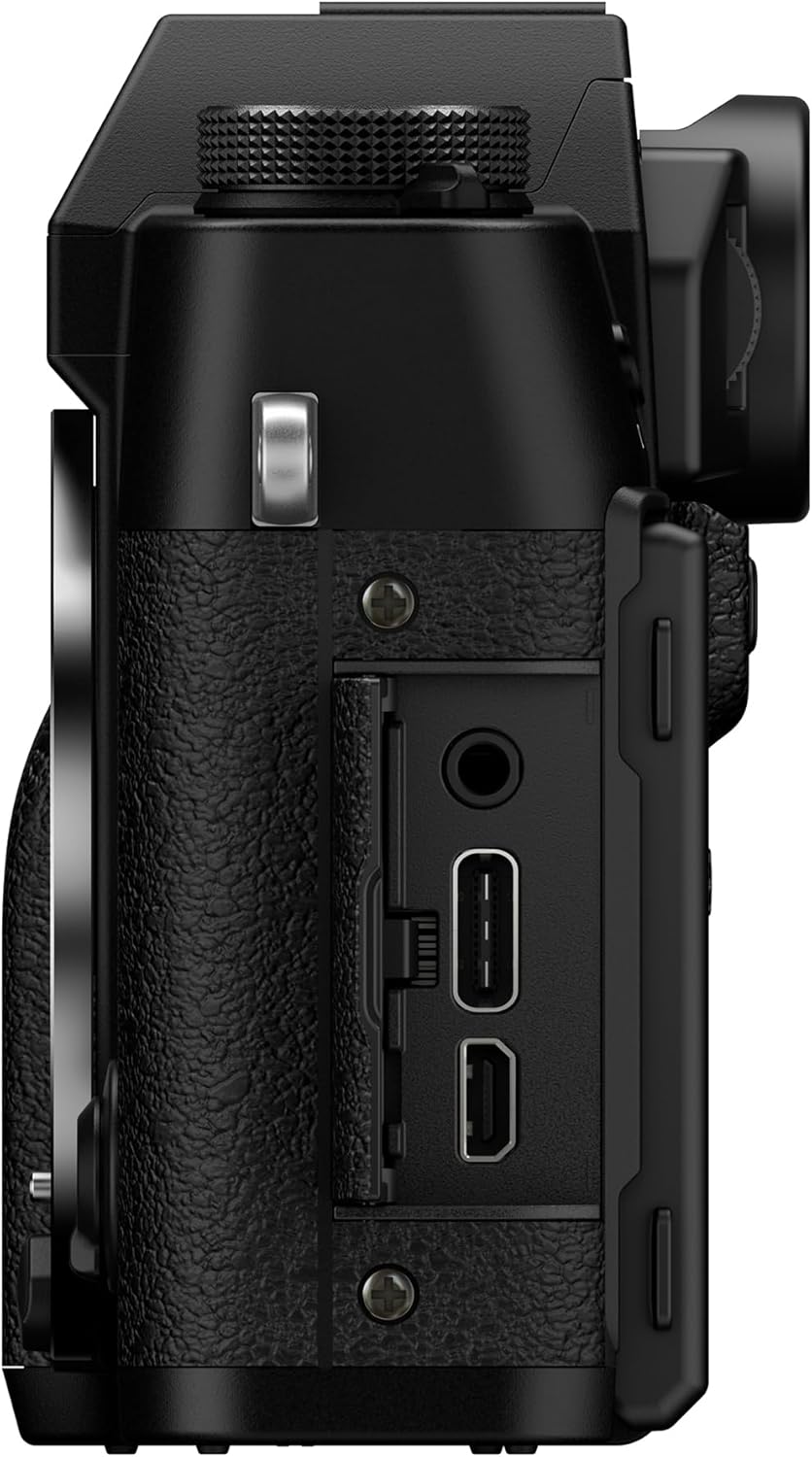

Specifications
- • Brand: Fujifilm
- • Batteries: 1 Lithium-ion battery is required. (included)
- • Compatible Mountings: Fujifilm X
- • Aspect Ratio: 4:3
- • Photo Sensor Technology: CMOS
- • Supported File Format: JPEG
- • Image Stabilization: Optical
- • Maximum Focal Length: 33 Millimeters
- • Optical Zoom: 1 x
- • Maximum Aperture: 1.8 f
- • Metering Description: Evaluative
- Key Highlight: Built-in Film Simulations that recreate classic vintage analog stocks natively inside the camera.
- Best For: Creators, style enthusiasts, and hybrid shooters who love rich color profiles and traditional tactile controls.
🟢 Pros
- Exceptional out-of-camera JPEG colors via proprietary Film Simulations.
- Beautiful retro aesthetic with dedicated physical exposure control dials.
- Large APS-C sensor delivers outstanding image detail and low-light control.
🔴 Cons
- The camera body does not include internal sensor stabilization (IBIS).
- Ergonomics can feel slightly cramped for photographers with larger hands.
3. Ricoh GR IIIx (The Pure Street Photography Weapon)
The Ricoh GR IIIx is a cult favorite among street photographers globally. Featuring a sharp, fixed $40\text{mm}$ equivalent prime lens paired with a large APS-C sensor, this minimalist machine delivers image quality that rivals bulky professional DSLRs while remaining genuinely pocket-sized.


Specifications
- • Batteries: 1 Lithium-ion battery is required. (included)
- • Compatible Mountings: Ricoh
- • Aspect Ratio: 1:1, 3:2
- • Photo Sensor Technology: CMOS
- • Supported File Format: JPEG, RAW, MP4
- • Image Stabilization: Sensor-shift
- • Maximum Focal Length: 40 Millimeters
- • Optical Zoom: 1 x
- • Maximum Aperture: 2.8 f
- • Expanded ISO Minimum: 102400
- • Metering Description: Center-Weighted Average, Highlight, Multi, Spot
- Key Highlight: "Snap Focus" mode allows you to bypass autofocus entirely, pre-setting the focus distance for instant, blur-free candid shots.
- Best For: Minimalist travelers, street documentary enthusiasts, and casual explorers who value discretion.
🟢 Pros
- Superb prime lens sharpness combined with an APS-C sensor.
- Incredibly stealthy, unobtrusive design perfect for candid street frames.
- Features built-in 3-axis sensor stabilization to prevent camera shake.
🔴 Cons
- Fixed focal length means you must use your feet to zoom in or out.
- The body lacks weather-sealing protection against dust and moisture.
4. Olympus OM-D E-M10 Mark IV (The Budget Interchangeable Compact)
The E-M10 Mark IV uses the highly versatile Micro Four Thirds lens mount, making both the body and its compatible lenses phenomenally small. Equipped with class-leading 5-axis image stabilization, it lets you shoot handheld long exposures effortlessly.


Specifications
- • Batteries: 1 Lithium-ion battery is required. (included)
- • Compatible Mountings: Micro Four Thirds
- • Aspect Ratio: 4:3
- • Photo Sensor Technology: CMOS
- • Supported File Format: RAW
- • Image Stabilization: Sensor-shift
- • Maximum Focal Length: 42 Millimeters
- • Optical Zoom: 3 x
- • Maximum Aperture: 5.6 Millimeters
- • Expanded ISO Minimum: 100
- • Metering Description: Average, Center-Weighted, Partial, Spot
- Key Highlight: Market-leading sensor stabilization that eliminates shaky frames even during dim evening walks.
- Best For: Budget-conscious explorers who want an interchangeable lens system without dealing with bulky gear.
🟢 Pros
- Incredible 5-axis stabilization provides rock-steady handheld shots.
- Access to an immense catalog of incredibly tiny, lightweight lenses.
- Highly approachable price point offers unmatched value for money.
🔴 Cons
- The smaller Micro Four Thirds sensor can struggle in extreme low light.
- The plastic construction elements feel less premium than metallic bodies.
5. GoPro HERO12 Black (The Ultimate Action Companion)
If your travels involve kayaking down rapids, hiking dusty trails, or skiing down snow slopes, traditional options might not cut it. The GoPro HERO12 Black is virtually indestructible, waterproof out of the box, and offers incredibly fluid electronic horizon-leveling stabilization.


Specifications
- • Brand: GoPro
- • Batteries: 1 Lithium-ion battery is required. (included)
- • Photo Sensor Technology: Other
- • Video Capture Resolution: 4K, 5.7K
- • Maximum Focal Length: 39 Millimeters
- • Maximum Aperture: 2.5 f
- • Flash Memory Type: SD
- • Video Capture Format: MP4, MOV
- • Supported Audio Format: AAC, PCM
- • Screen Size: 2.3 Inches
- • Connectivity Technology: Bluetooth
- Key Highlight: Rugged, ultra-wide perspective capture that thrives in intense conditions where other setups would fail.
- Best For: Adventure travelers, backpackers, and vloggers who prioritize durability and wide-angle action.
🟢 Pros
- Completely waterproof and built to withstand drops and extreme elements.
- HyperSmooth stabilization makes moving footage look like it's on a gimbal.
- Ultra-compact footprint mounts easily onto backpacks, helmets, or straps.
🔴 Cons
- Small action-cam sensor limits low-light architectural capabilities.
- Fixed ultra-wide perspective results in noticeable barrel distortion.
Comparison Table: Selecting Your Travel Companion
Here is a quick breakdown to help you match a setup with your travel style:
| Camera Model | Sensor Size | Lens Configuration | Best Travel Match |
|---|---|---|---|
| Sony RX100 VII | 1-Inch Type | Built-in 24-200mm Zoom | All-in-One Family/City Travels |
| Fujifilm X-T30 II | APS-C Sensor | Interchangeable Mount | Creative Street & Aesthetic Blogging |
| Ricoh GR IIIx | APS-C Sensor | Fixed 40mm Prime Lens | Minimalist Steathy Backpacking |
| Olympus E-M10 IV | Micro Four Thirds | Interchangeable Mount | Budget-Minded Multi-Lens Setups |
| GoPro HERO12 Black | 1/1.9-Inch Action Cam | Fixed Ultra-Wide Lens | Extreme Sports & Waterproof Adventures |
Frequently Asked Questions (FAQs)
Q1: Why choose a dedicated travel camera over a flagship smartphone? +
While smartphones utilize computational software tricks, dedicated travel cameras feature much larger physical glass elements and image sensors. This translates into genuine optical depth, significantly better low-light handling, longer optical zoom capabilities, and tactile ergonomics that allow you to focus purely on framing your shot.
Q2: Are interchangeable lens cameras practical for long-term backpacking? +
Yes, provided you keep your lens selection calculated. Pairing an interchangeable camera body with a singular, versatile zoom or a compact pancake prime lens offers the benefits of a premium configuration without adding substantial bulk to your pack.
Q3: How do I keep my digital gear protected while exploring rugged trails? +
Investing in a padded camera cube that slots into your regular backpack keeps your gear insulated against bumps. Additionally, utilizing weather-resistant camera pouches and a protective UV filter on the front of your lens helps safeguard delicate components from unexpected dust, spray, and grit.
Leave a Reply