

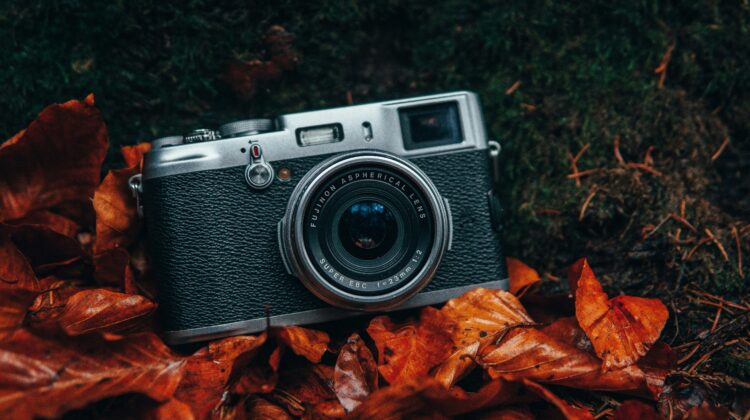
If you have ever seen a street photographer candidly capturing a moment with a sleek, vintage-looking camera, chances are they were using a rangefinder. Unlike massive, heavy DSLRs or modern sterile mirrorless systems, rangefinder cameras occupy a legendary status in the history of photography. They are the tools that defined street photography, used by masters like Henri Cartier-Bresson to capture “The Decisive Moment.“
But what exactly makes a rangefinder camera so unique, and why are modern creators suddenly falling back in love with this manual focusing system? If you are looking to simplify your workflow, improve your framing, and carry a camera that doesn’t weigh you down, here is everything you need to know about navigating the world of rangefinders without spending Leica-level money.
Fujifilm Instax Mini 13 Review
How Does a Rangefinder Camera Work?
Unlike an SLR (Single-Lens Reflex) camera, where you look directly through the camera lens via a mirror setup, a rangefinder uses a completely independent viewfinder window.
When you look through a rangefinder, you see two overlapping images in the center focus patch:
- One image comes straight through the main viewfinder.
- The ghost image shifts as you turn the lens’s focusing ring.
To achieve perfect focus, you simply turn the lens until these two distinct images merge cleanly into one single, razor-sharp alignment. It is fast, incredibly precise, and highly satisfying once you master the muscle memory.
🟢 The Rangefinder Advantage
- You see outside the frame: The viewfinder lets you anticipate subjects walking into your shot.
- Ultra-quiet operation: No flipping mirror means the shutter sound is just a whisper.
- Compact design: Body and lenses are drastically smaller than bulky SLR gear.
🔴 The Limitations
- Parallax Error: What you see through the window is slightly offset from what the lens sees at close distances.
- Not suitable for heavy telephoto zoom lenses or extreme macro work.
Rangefinder vs. SLR: Quick Breakdown
Understanding these mechanical differences helps clarify why street and travel photographers consistently choose these systems:
| Feature | Rangefinder Cameras | SLR Cameras |
|---|---|---|
| Viewing System | Separate independent window (Never blackouts) | Through-the-lens via internal reflex mirror |
| Size & Discretion | Small, highly pocketable, completely candid | Larger, more conspicuous, distinct shutter slap |
| Focus Method | Manual split-image dual patch alignment | Matte screen focus or early ground glass |
Best Affordable Rangefinder Cameras for Beginners (Affiliate Zone)
You don’t need a multi-thousand dollar Leica M system to get the true analog experience. These incredible vintage classics offer premium glass and authentic mechanical rangefinder patches for a tiny fraction of the cost:
Recommended Budget Rangefinder Gems:
-
The Japanese Leica:
BUDGET PICKStar Rating★★★★★4.5 out of 5 starsOur Score9.5/10Specifications
- • Brand: Canon
- • Special Feature: Coincidence Rangefinder Focusing
- • Film Format Type: 35mm
- • Included Components: Battery, Instruction Manual
- • Model Name: Canon Canonet G-III QL17
- • Film Color: color
- • Compatible Devices: Camera
- • Min Shutter Speed: 30 Seconds
- • Batteries: 1 Lithium-ion battery is required. (included)
- • Viewfinder Magnification: 0.5-0.7x
- • Shutter Type: Mechanical
-
Compact Budget King:
BEST VALUEStar Rating★★★★★4.9 out of 5 starsOur Score9.9/10Specifications
- • Brand: Olympus
- • Special Feature: Auto Exposure
- • Film Format Type: 35mm
- • Model Name: OLYMPUS Trip 35
- • Film Color: Colored
- • Compatible Devices: Camera
- • Batteries: 1 Lithium-ion battery is required. (included)
- • Unit Count: 1.0 Count
- • UPC: 703670514371
-
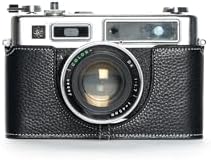
Interchangeable Lens Value:
TOP CHOICEStar Rating★★★★★4.9 out of 5 starsOur Score9.9/10Specifications
- • Brand: TP Original
- • Film Format Type: 35mm
- • Included Components: Camera Half Case Only
- • Compatible Devices: Yashica Electro 35 GS/GSN/GT/GTN
- • Batteries: 1 Lithium-ion battery is required. (included)
- • UPC: 027685978042
- • Compatible Camera Film Format Type: 35mm
Q1: What is parallax error in rangefinder cameras? +
Parallax error happens because the viewfinder is located slightly above or to the side of the actual taking lens. While framing distant targets is perfectly accurate, when shooting subjects closer than 1 meter, what you see in the frame is slightly offset from what the film actually records. Many rangefinders have automatic composition correction lines inside the window to fix this.
Q2: Can I use modern zoom lenses on a vintage rangefinder camera? +
No. True rangefinder mechanisms rely on a physical mechanical cam linking the lens focus ring directly to the internal viewfinder optics. Because of this intricate mechanical design, rangefinders are almost exclusively paired with prime lenses (like 28mm, 35mm, or 50mm).




Leave a Reply